What India Knows One Year On
- On April 22, 2025, 26 people were murdered at Baisaran Valley near Pahalgam. Most were Hindu tourists. They were asked to prove their religion before being shot.
- The three men who pulled the triggers are dead. India’s security forces killed them on July 29, 2025 in the forests of Dachigam, 93 days after the attack.
- The man who sent them the GPS coordinates, planned the operation, and directed the cell from a three-storey yellow house in Islamabad is alive. His name is Habibullah Malik, also known as Sajid Jatt, also known as Langda. He is LeT’s most wanted Pakistan-based commander.
- India filed a 1,597-page chargesheet naming him as the principal conspirator. He has been declared a proclaimed offender. A non-bailable warrant has been issued. Pakistan has done nothing.
- Today, on the first anniversary of Operation Sindoor, the Indian Army posted: “OPERATION SINDOOR CONTINUES.” The question is: continues toward what?
Operation Sindoor Killed the Foot Soldiers. The Man Who Sent Them Is Still Walking Free.
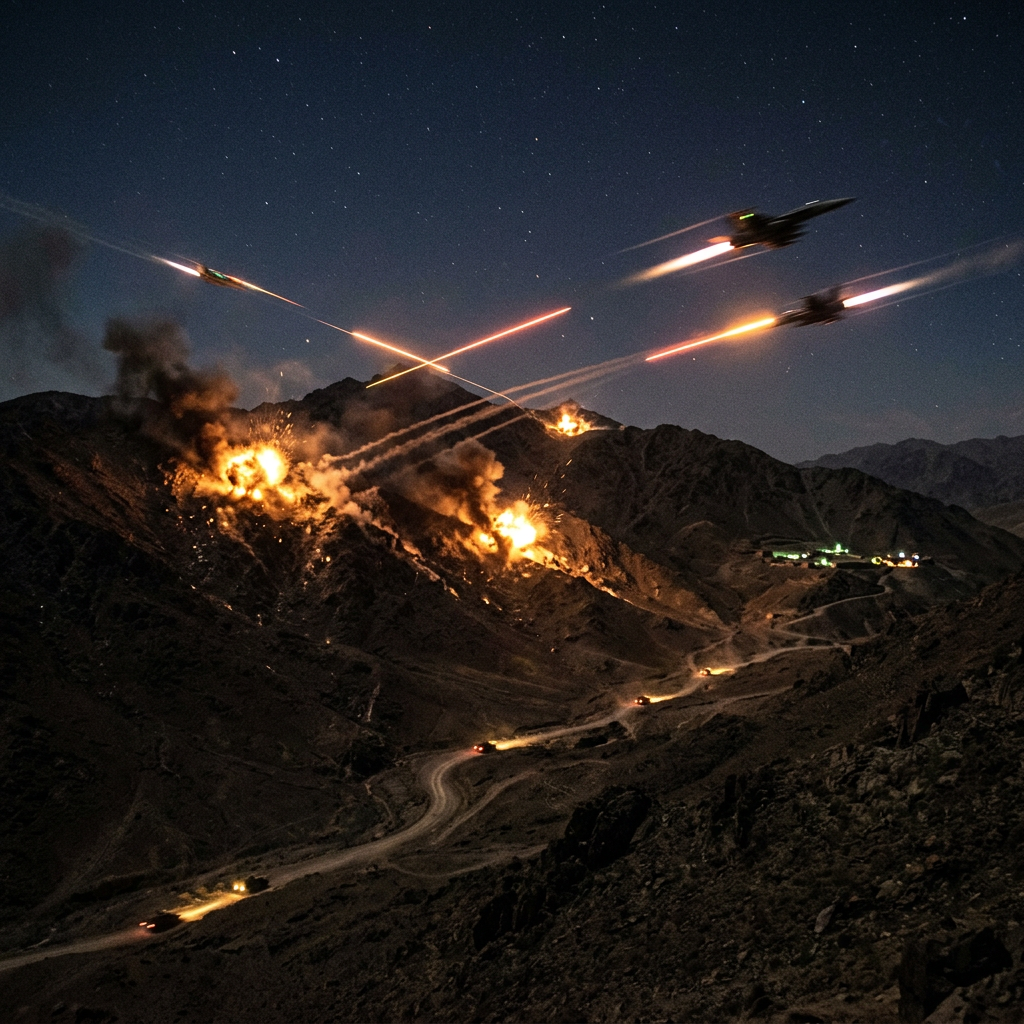
One year ago today, India did something it had not done since 1971. It struck deep inside Pakistan’s Punjab province. Nine terror launchpads were destroyed in a tri-service operation that lasted four days and brought two nuclear-armed neighbours closer to full-scale war than at any point in the last 25 years. The world held its breath. A ceasefire was reached on May 10. India said justice had been served.
It had not been. Not entirely.
The three men who walked into Baisaran Valley on April 22, 2025 and shot 26 tourists after asking them to recite Islamic prayers to prove their religion are dead. India hunted them for 93 days through some of the most treacherous terrain in the Himalayas and killed them in Dachigam forest near Srinagar on July 29. Their weapons were recovered. Forensic matches were confirmed. Those three men will never plan another attack.
But the man who gave them the order is having breakfast in Islamabad this morning.
His name is Habibullah Malik. You know him as Sajid Jatt. India’s investigators know him as Langda. He is the LeT commander who sent the three attackers their GPS coordinates via WhatsApp on an Alpine Quest App. He is the man named as the principal conspirator in the NIA’s 1,597-page chargesheet. He is the reason Operation Sindoor was launched. He is the reason 26 families spent the last year without someone they loved.
He is free. And Pakistan is protecting him.
That is the only story worth telling today.
Who Is Sajid Jatt? The Man Behind the Massacre
Most anniversary coverage will skip this section. It will give you statistics about Operation Sindoor, quotes from the Indian Army’s social media posts, and move on. We are not doing that. If you want to understand why justice remains incomplete one year on, you need to know exactly who Sajid Jatt is, where he came from, and why he is impossible to reach.
His real name is Habibullah Malik. He was born in 1982 in Kasur district in Pakistan’s Punjab province. He first infiltrated Jammu and Kashmir in 2005 under the assumed name Salim Langda alias Saifullah, establishing a base in Yaripora village in Kulgam district. He blended in. He married a local woman, Shabbira Kutche. The couple had a son named Umar but Habibullah fled back to Pakistan with his wife in 2007, abandoning his infant son in the village.
That abandoned child in Kulgam is the detail that tells you everything about the kind of man India is dealing with.
Back in Pakistan, he ran a dairy business in Kasur as front cover while deepening his LeT ties, training three times a year at LeT’s Markaz Yarmouk camp. In 2012, senior LeT leader Zaki-ur-Rehman Lakhvi elevated him to a key operational role overseeing Kashmir-specific modules. Post-2012, he adopted aliases like Sajid Jatt and Ali Sajid, directing attacks from across the border while heading LeT’s offshoot, The Resistance Front.
Sajid Jatt: Identity Card
| Detail | Information |
|---|---|
| Real name | Habibullah Malik |
| Born | 1982, Kasur district, Punjab, Pakistan |
| Aliases | Sajid Jatt, Saifullah, Langda, Abu Muawiya, Numan Bhai, Usman Habib, Ali Sajid, Shani, Nomi |
| Physical identifier | Prosthetic leg below the knee (hence “Langda”) |
| LeT rank | Senior commander, operational chief of TRF |
| Current location | Soan Garden, Islamabad (ISI safe house) |
| UAPA designation | Designated “individual terrorist” October 2022 |
| NIA status | Principal conspirator, proclaimed offender, trial in absentia |
| Bounty | Rs 10 lakh |
| Prior attacks | Gagangir October 2024, Hyderpora 2013, multiple Poonch operations |
In October 2022, he was officially designated an “individual terrorist” under the Unlawful Activities Prevention Act. He is said to be the operational chief of TRF and plays a crucial role in recruitment, funding, infiltration and providing logistical and operational support to hybrid terrorists active in the Kashmir Valley.
He is also described as a close aide to LeT founder Hafiz Saeed and has been linked to the group’s political front, Milli Muslim League. Inter-Services Intelligence of Pakistan has housed him in a three-storey yellow-coloured house in Soan Garden, Islamabad, an active LeT command hub shared with other operatives.
This is not a man hiding in a cave. He is living in a named neighbourhood in the Pakistani capital, in a house that Indian intelligence has photographed, in a building shared with other LeT operatives. He is not hiding. He does not need to hide. Pakistan is not looking for him.
April 22, 2025: What Happened at Baisaran Valley
Baisaran is called the “Mini Switzerland of Kashmir.” A meadow at 2,400 metres, ringed by pine forests, accessible only on foot or by pony. Families go there for picnics. Tourists go there for photographs. On April 22, 2025, 26 of them went there and did not come back.
The three attackers, Bilal Afzal alias Faisal Jatt, Habeeb Tahir alias Jibran, and Hamza Afghani, all Pakistani nationals from Punjab and PoK, had been sheltered the night before by Bashir Ahmad Jothad, a local pony operator, and his nephew Parvaiz Ahmad, in a seasonal forest hut near Hill Park, Pahalgam. The men arrived with weapons visible and spoke with a Punjabi inflection. They asked for shelter “in the name of Allah.” They were fed and housed.
The next afternoon they walked to Baisaran and opened fire. They carried M4 carbines and AK-47s. They forced victims to recite Islamic prayers or display physical markers of their religion before shooting them. Twenty-four Hindu men were killed where they stood. A Nepali citizen and a local Kashmiri pony owner who happened to be there also died.
Recovered mobile phones, forensically examined at the Central Forensic Science Laboratory, revealed WhatsApp messages from Sajid Jatt’s number sending precise coordinates via the Alpine Quest App. Devices were traced to LeT-linked sites near Karachi’s Faisal House and Lahore’s Quaid-e-Azam Industrial Estate.
The attack was planned from Pakistan. The coordinates came from Pakistan. The weapons had been used in a previous attack in Gagangir in October 2024, also linked to Sajid Jatt. This was not a spontaneous act of local militancy. It was a precision operation run by a LeT commander living in ISI accommodation in Islamabad.
The TRF: How Pakistan Maintains Deniability
Before we get to Operation Sindoor, you need to understand the mechanism Pakistan uses to conduct attacks while claiming no involvement. It is called The Resistance Front, or TRF, and it is one of the most cynically engineered pieces of terror architecture in South Asia.
TRF was created in 2019 for one specific purpose: to allow Lashkar-e-Taiba to conduct operations in Kashmir while appearing to be a “local Kashmiri resistance movement.” The timing was not coincidental. Pakistan was on the Financial Action Task Force grey list, under international pressure to crack down on LeT. Creating a proxy with a Kashmiri-sounding name allowed Pakistan to maintain plausible deniability with international financial regulators while LeT operations continued uninterrupted.
The chargesheet dismantles the facade of The Resistance Front, an LeT proxy unveiled in 2019 to shield Pakistan from international backlash, particularly from the Financial Action Task Force, by masquerading as a “local Kashmiri” outfit. TRF swiftly claimed responsibility for the Pahalgam carnage before retracting amid scrutiny, a move experts dismiss as disinformation, given linguistic and operational signatures linking it firmly to Lashkar.
TRF claimed the Pahalgam attack on social media. Then it retracted the claim when the international pressure became uncomfortable. Pakistan’s own Foreign Minister Ishaq Dar, asked about TRF in Parliament, said: “We don’t consider TRF illegal.” Pakistan’s Defence Minister Khawaja Asif simultaneously called the attack a “homegrown insurgent attack” and suggested it may have been a “false flag operation” by India.
Two nuclear-armed neighbours. Twenty-six bodies. And the country that housed the planner is calling it a false flag.
Operation Sindoor: What Happened and What It Actually Destroyed
India gave Pakistan 15 days after the Pahalgam attack. Then it acted.
On the night of May 6-7, 2025, the Indian Armed Forces launched Operation Sindoor. Rafale jets armed with SCALP missiles and HAMMER bombs led the precision strikes, while electronic warfare systems jammed Pakistan’s Chinese-supplied air defence grid. Indigenous Akash missiles intercepted retaliatory drones, exposing vulnerabilities in Pakistan’s air defence and damaging nearly a fifth of its air force infrastructure.
Nine Targets Destroyed in Operation Sindoor
| Location | Target | Organisation |
|---|---|---|
| Bahawalpur | JeM headquarters | Jaish-e-Mohammed |
| Muridke | LeT headquarters | Lashkar-e-Taiba |
| Sialkot | Terror training facility | LeT |
| Muzaffarabad (PoK) | Terror launchpad | Multiple groups |
| Kotli (PoK) | Terror camp | Multiple groups |
| Bhimber (PoK) | Training facility | Multiple groups |
| Additional sites (3) | Terror infrastructure | JeM, LeT, Hizbul Mujahideen |
For the first time since 1971, India struck deep into Pakistan’s Punjab province, targeting camps in Muridke, Bahawalpur, Sialkot, Muzaffarabad, Kotli, and Bhimber. Over a hundred militants were killed. The operation was deliberately halted on India’s terms after four days of intense clashes, underscoring that New Delhi was prepared for a prolonged conflict but chose calibrated restraint.
Pakistan retaliated. Artillery opened up along the LoC. The PAF launched over 300 drones and JF-17s firing CM-400AKG missiles. India’s S-400 batteries intercepted the bulk of it. A ceasefire was reached on May 10 after US Vice President JD Vance and Secretary of State Marco Rubio made urgent calls to both sides.
Operation Sindoor was, by most military measures, a tactical success. India struck targets it had never struck before. It demonstrated that the LoC and even Pakistani territory would no longer be sanctuaries. It extracted a real cost from Pakistan’s terror infrastructure.
The man who ordered the Pahalgam attack remained untouched in his Islamabad safe house throughout.
Operation Mahadev: How India Actually Got the Trigger-Pullers
Operation Sindoor destroyed the infrastructure. A separate operation, running in parallel, hunted the three men who actually fired the weapons.
Operation Mahadev, launched in parallel, tracked and eliminated the perpetrators of the Pahalgam attack after ninety-three days of pursuit in treacherous Himalayan terrain. Indian security forces tracked a Huawei satellite phone that had been monitored since April 22, pinging the Inmarsat-4 F1 satellite, and eventually cornered all three attackers in the Dachigam forest area near Srinagar on July 29, 2025.
Operation Sindoor vs Operation Mahadev: The Difference
| Aspect | Operation Sindoor | Operation Mahadev |
|---|---|---|
| Launched | May 6-7, 2025 | April 22, 2025 (day of attack) |
| Target | Terror infrastructure in Pakistan and PoK | Three Pahalgam attackers inside India |
| Duration | 4 days | 93 days |
| Outcome | 9 camps destroyed, 100+ militants killed | All three attackers killed July 29, 2025 |
| Location | Pakistan, Pakistan-occupied Kashmir | Dachigam forest, Srinagar |
| What it addressed | The system that produced the attack | The individuals who carried it out |
| What it did not address | The commander who ordered the attack | The commander who ordered the attack |
Both operations were necessary. Neither one reached Sajid Jatt.
Why Sajid Jatt Is Still Free: The Impunity Problem Explained
This is the question every anniversary piece skips. Not because it is complicated. Because the answer is embarrassing for a narrative of decisive justice.
Sajid Jatt is free for one reason and one reason only: Pakistan has decided he should be free. This is not a law enforcement gap. It is not a failure of international legal mechanisms. It is a policy choice by the Pakistani state, specifically by the ISI, which not only knows where he lives but is paying for the house he lives in.
The structural relationship between ISI and LeT is not a conspiracy theory. It is a documented operational reality confirmed by the NIA’s 1,597-page chargesheet, by US Treasury designations, by FATF findings, and by Pakistan’s own former officials. Pakistan’s Defence Minister Khawaja Asif told Sky News during the crisis that Pakistan had “done the dirty work for the United States for about three decades” — an acknowledgment that the state has historically used non-state actors as instruments of foreign policy.
Sajid Jatt is not a rogue operative that Pakistan cannot find. He is an asset that Pakistan will not surrender.
What India has done legally:
The NIA chargesheet filed December 15, 2025 runs 1,597 pages. It details communication records, WhatsApp forensics, financial trails, witness testimony, ballistic matches and satellite phone data linking Sajid Jatt directly to the attack cell. The court declared Jatt a proclaimed offender and directed that his charge memo be placed on file for trial in absentia under Section 356 BNSS. A non-bailable warrant was issued through SSP Kulgam.
India designated Sajid Jatt an individual terrorist under UAPA in October 2022, two years before Pahalgam. A Rs 10 lakh bounty has been placed on him. Multiple previous chargesheets naming him for waging war against India exist in Indian courts.
What none of this can do:
There is no extradition treaty between India and Pakistan. The Shimla Agreement, which governed bilateral dispute resolution, was suspended by Pakistan in retaliation for India’s suspension of the Indus Waters Treaty. INTERPOL Red Notices require the cooperation of the country where the subject resides. Pakistan would need to present Sajid Jatt to an Indian or international court, which it has never done for any LeT commander in its history, including Hafiz Saeed himself, who remains in Pakistan despite being convicted by a Pakistani court on terror financing charges in 2022.
The historical precedent is clear and brutal. Indian authorities have said they will continue efforts to bring the planners, including Sajid Jatt, to justice through international legal channels. These efforts have not produced a single extradition of a Pakistan-based LeT commander in the entire history of the organisation.
The Sawhney Question: Did Operation Sindoor Actually Work?
The government’s anniversary messaging is triumphant. “Operation Sindoor continues.” Nine camps destroyed. New doctrine established. Nuclear bluff called. The narrative is clean and heroic.
There is a credible alternative view that deserves serious engagement rather than dismissal.
Pravin Sawhney, a former Indian Army officer and founder of FORCE magazine with 40 years of defence analysis experience, posted on April 30, 2026 that “this operation was as big a blunder” as previous Indian military miscalculations. His analysis, published in The Wire in June 2025, is more specific: through Operation Sindoor, India has not achieved its political objective of ending Pakistan’s proxy war in Jammu and Kashmir. It has also not accomplished the military aim of establishing deterrence against the Pakistan military. If anything, this operation has enhanced China’s global profile as a reliable friend capable of walking the talk.
Sawhney’s core argument is not that the strikes were wrong. It is that they were incomplete. The operation was paused — his word is important: paused, not ended — before India could establish the kind of deterrence that would actually change Pakistan’s calculus. The ceasefire, which came after US intervention rather than Indian decision, locked in a “new normal” that has lowered the war threshold without raising the cost of Pakistani sponsorship of terrorism.
The counter-argument is equally serious. India struck targets inside Pakistan’s Punjab province for the first time since 1971. It demonstrated that the old rules of engagement no longer applied. It signalled that the next Pahalgam-scale attack will produce a response more severe than the last. That is a form of deterrence even if it is not the complete deterrence Sawhney wanted.
Both arguments can be true simultaneously. Operation Sindoor was a tactical success and a strategic work in progress. The question of whether it changed Pakistan’s behaviour will only be answered by whether another Pahalgam happens.
One year on, Sajid Jatt is still free. That is not an answer to that question. But it is a data point.
What the Families of 26 Deserve to Hear Today
The anniversary coverage will focus on military doctrine, geopolitical positioning, and strategic debates. That is important. But the 26 people killed at Baisaran Valley were not strategic assets. They were a retired naval officer from Maharashtra. A software engineer from Karnataka who had taken his family on holiday. A local pony operator named Mohammad Hanif who died trying to protect tourists. A Nepali tourist who was in the wrong meadow on the wrong afternoon.
Their families were told that justice would be served. Modi promised the attackers would be chased “to the ends of the earth.” The Indian Army flew fighter jets over Pakistan.
The three men who fired the weapons are dead. That is justice of a kind. Incomplete justice, because Sajid Jatt planned the operation, sent the coordinates, managed the cell, and will plan the next one from his Islamabad safe house unless something fundamentally changes about Pakistan’s willingness to protect him.
The 26 families deserve to know the full picture today, not the official version. The full picture is: the foot soldiers are dead, the general is free, the camps are destroyed but can be rebuilt, the ceasefire holds but the war threshold is lower, and the man most responsible for April 22, 2025 is listed in an Indian chargesheet as a proclaimed offender while living under ISI protection in Pakistan’s capital.
That is what justice looks like one year after Pahalgam. Partial. Frustrated. And unfinished.
Frequently Asked Questions
Q1. Who is Sajid Jatt and what is his role in Lashkar-e-Taiba? Sajid Jatt’s real name is Habibullah Malik. Born in 1982 in Kasur district, Punjab, Pakistan, he is a senior Lashkar-e-Taiba commander and the operational chief of TRF, LeT’s proxy front organisation. He first infiltrated Jammu and Kashmir in 2005, married a local woman, and returned to Pakistan in 2007. In 2012, senior LeT leader Zaki-ur-Rehman Lakhvi elevated him to lead Kashmir-specific operational modules. He has been linked to multiple attacks including Gagangir in October 2024, the Hyderpora fidayeen attack in 2013, and multiple operations in Poonch. He operates from an ISI safe house in Soan Garden, Islamabad.
Q2. What exactly does the NIA chargesheet say about Sajid Jatt’s role in the Pahalgam attack? The NIA’s 1,597-page chargesheet filed on December 15, 2025 names Sajid Jatt as the principal conspirator and cross-border handler. It provides forensic evidence that WhatsApp messages from his number sent the three attackers precise GPS coordinates via the Alpine Quest App. Digital trails link his communications to LeT-linked sites in Karachi and Lahore. The court has declared him a proclaimed offender and ordered trial to proceed in absentia. He has been charged under multiple provisions of the BNS, Arms Act, and UAPA, including waging war against India.
Q3. What was Operation Sindoor and which specific targets were struck? Operation Sindoor was launched on the night of May 6-7, 2025, 15 days after the Pahalgam attack. India’s tri-service forces struck nine terror launchpads in Pakistan and Pakistan-occupied Kashmir, targeting Lashkar-e-Taiba facilities in Muridke and Sialkot, Jaish-e-Mohammed headquarters in Bahawalpur, and multiple camps in Muzaffarabad, Kotli, and Bhimber in PoK. Rafale jets armed with SCALP missiles and HAMMER bombs led the strikes. Over 100 militants were killed. Pakistan retaliated with drone and artillery strikes before a ceasefire was reached on May 10 following US diplomatic intervention.
Q4. Why has Pakistan not arrested or extradited Sajid Jatt despite an NIA chargesheet naming him? Sajid Jatt is housed in an ISI safe house in Soan Garden, Islamabad. His freedom is a deliberate Pakistani policy choice, not a law enforcement gap. There is no extradition treaty between India and Pakistan. The Shimla Agreement governing bilateral dispute resolution has been suspended. Pakistan has never extradited any LeT commander to India or a third country in the organisation’s entire history. Pakistan’s own Foreign Minister said during the crisis that TRF, the front organisation Sajid Jatt leads, is “not illegal” under Pakistani law.
Q5. What is The Resistance Front and how does it connect to the Pahalgam attack? The Resistance Front was created by Lashkar-e-Taiba in 2019 specifically to provide Pakistan with plausible deniability while continuing cross-border operations in Kashmir. It was designed to appear as a “local Kashmiri” movement to deflect FATF scrutiny of Pakistan’s terror financing. Sajid Jatt is TRF’s operational chief. TRF initially claimed responsibility for the Pahalgam attack on social media, then retracted the claim under international pressure. NIA forensics link TRF’s Pahalgam propaganda directly to Pakistani phone numbers and locations including Battagram in Khyber Pakhtunkhwa.
Q6. What happened to all the accused in the Pahalgam attack case? The three direct attackers, Faisal Jatt alias Suleman Shah, Habeeb Tahir alias Jibran, and Hamza Afghani, were killed by Indian security forces in Operation Mahadev at Dachigam forest near Srinagar on July 29, 2025. Local accomplices Bashir Ahmad Jothad and his nephew Parvaiz Ahmad were arrested on June 22, 2025 and charged under UAPA Section 19 for harbouring terrorists. Logistics operative Mohammad Yousuf Kataria was arrested in September 2025. Sajid Jatt, the principal conspirator, remains in Pakistan. Hafiz Saeed is also named as a top-level planner and remains in Pakistan.
Q7. What does the first anniversary of Operation Sindoor mean for the families of the 26 victims? The Indian Army’s anniversary message reads “OPERATION SINDOOR CONTINUES.” For the families of 26 victims, that continuation means the mastermind of the attack that took their loved ones remains alive, protected, and operational in Islamabad. The three attackers are dead. The local accomplices are in custody. The infrastructure was struck. But Sajid Jatt, who sent the GPS coordinates that guided the killers to Baisaran Valley, has not faced a single consequence in any court anywhere in the world. That is the justice gap that no anniversary statement addresses.
Sources
- Daily Pioneer — Pahalgam Butcher Linked to Posh Pak Area — https://dailypioneer.com/news/pahalgam-butcher-linked-to-posh-pak-area
- India TV News — NIA Names Top LeT Commander Sajid Jatt as Key Conspirator in Pahalgam Terror Attack — https://www.indiatvnews.com/news/india/nia-files-chargesheets-names-top-let-commander-sajid-jatt-as-key-conspirator-in-pahalgam-terror-attack-case-latest-updates-2025-12-15-1021826
- Organiser — Pahalgam Attack: Prosecution Names Pakistani Handler Sajid Jatt — https://organiser.org/2026/05/05/352003/bharat/pahalgam-terror-attack-nia-court-frames-charges-against-pakistani-let-handler-sajid-jatt-local-accomplices/
- The Logical Indian — NIA Chargesheet Names Pakistan LeT Commander Sajid Jatt as Mastermind — https://thelogicalindian.com/nia-chargesheet-names-pakistan-let-commander-sajid-jatt-as-mastermind-behind-pahalgam-terror-attack-killing-26/
- Kashmir Life — NIA Chargesheets Pakistan-Based Sajid Jatt, LeT and TRF in Pahalgam Massacre — https://kashmirlife.net/nia-chargesheets-pakistan-based-sajid-jatt-let-and-trf-in-pahalgam-massacre-417261/
- Indian Defence News — Operation Sindoor Real Impact: One Year On — https://www.indiandefensenews.in/2026/05/operation-sindoor-real-impact-one-year.html
- The Wire — Operation Sindoor: How India’s Gamble Backfired and Made It More Vulnerable (Pravin Sawhney) — https://m.thewire.in/article/security/operation-sindoor-how-indias-gamble-backfired-and-made-it-more-vulnerable
- Outlook India — From Pahalgam to Operation Sindoor: 19 Days That Brought India, Pakistan to the Edge — https://www.outlookindia.com/national/from-pahalgam-to-operation-sindoor-19-days-that-brought-india-pakistan-to-the-edge
- Kashmir Observer — Operation Sindoor Continues, Says India on Pahalgam Anniversary — https://kashmirobserver.net/2026/04/22/operation-sindoor-continues-says-india-on-pahalgam-anniversary/
- News24 — Pahalgam Attack Probe, One Year Later — https://news24online.com/india/pahalgam-attack-anniversary-one-year-after-what-investigation-has-eevealed-so-far/812935/
- Wikipedia — 2025 Pahalgam Attack — https://en.wikipedia.org/wiki/2025_Pahalgam_attack
- PIB — Operation Sindoor: India’s Strategic Clarity and Calculated Force — https://www.pib.gov.in/PressReleasePage.aspx?PRID=2128747
Related Read
- TNT News — India’s Last Iron Woman Just Lost Bengal. Where Is the Next One? — https://tntnews.buzz/india-female-political-leader-mamata-banerjee-lost-bengal-next-woman-leader/
Dilshad is a journalist, filmmaker and digital marketing expert covering Indian politics and elections at TNT News.
Leave a Reply